
Reliable commercial refrigeration system fault diagnosis and repairs
We attend to commercial display refrigerators, chilled storage cabinets, undercounter units and related cooling installations with unstable temperatures, alarms, leaks, frost or repeated shutdowns. We focus on protecting operational continuity while tracing the technical cause; the business remains responsible for decisions about product safety and disposal.
Samrand businesses may use refrigerated storage units in warehouse offices, distribution spaces or food handling premises. We ask about delivery schedules, loading patterns and room temperatures around the equipment. These details make it easier to distinguish an unsuitable operating environment from a developing system fault.
Faults we can assess
In Samrand, repeated warming during dispatch is best analysed with both cabinet temperature logs and the timing of stock movement. Door opening frequency and newly arrived goods affect heat load, but failed evaporator fans or restricted condensers can also prevent recovery. We ask what happens after the area becomes quiet.
- Display cabinet or undercounter unit above its normal temperature
- Short cycling, protection trips or repeated high-temperature alarms
- Iced evaporators, condensation or leaking condensate
- Cooling performance falling during busy loading or trading periods
A chiller holds overnight but warms during dispatch
The difference between overnight operation and peak loading is diagnostically important. Long door-open intervals or newly introduced warm product can temporarily exceed capacity, but worn seals, ineffective fans and fouled condensers may amplify the issue. We review the temperature history before advising a repair or operational change.
An evaporator forms ice and blocks airflow
Ice can develop from defrost component faults, moisture ingress, blocked drainage or abnormal use. We look at where ice forms and whether the defrost cycle actually runs. Manually scraping coils risks damage and should not replace fault diagnosis.
The cabinet controller and actual product temperatures disagree
Probe location, calibration and loading can create meaningful differences. We compare recorded cabinet readings with independent checks and review whether the sensor is correctly positioned before changing the set point.
A practical repair plan, not unnecessary parts
Samrand chilled cabinets can face uneven demand between quiet storage periods and order-picking sessions. We ask for time-stamped temperatures and a record of door openings. If the cabinet holds overnight but fails during dispatch, that directs attention toward capacity, airflow, door sealing and whether the condenser has adequate ventilation.
An evaporator covered with ice could have a defrost-control issue, a blocked condensate path or excessive moisture ingress. We inspect the frost pattern rather than chipping ice away. A temporarily cleared evaporator may cool again for several hours while the root cause remains untreated.
What we check before recommending a repair
Ice around the evaporator can reflect defrost faults, warm-air leakage or blocked drainage; correcting only the visible ice would risk recurrence. We check the controller sensor and defrost cycle before recommending parts. If refrigeration circuit work is indicated, we first establish the actual defect and the appropriate handling requirements.
If the controller’s reading conflicts with independent measurements, sensor placement and calibration require assessment before set points are adjusted. We coordinate safe equipment access with warehouse management and ask where temperature-sensitive goods can be transferred if a shutdown is needed.
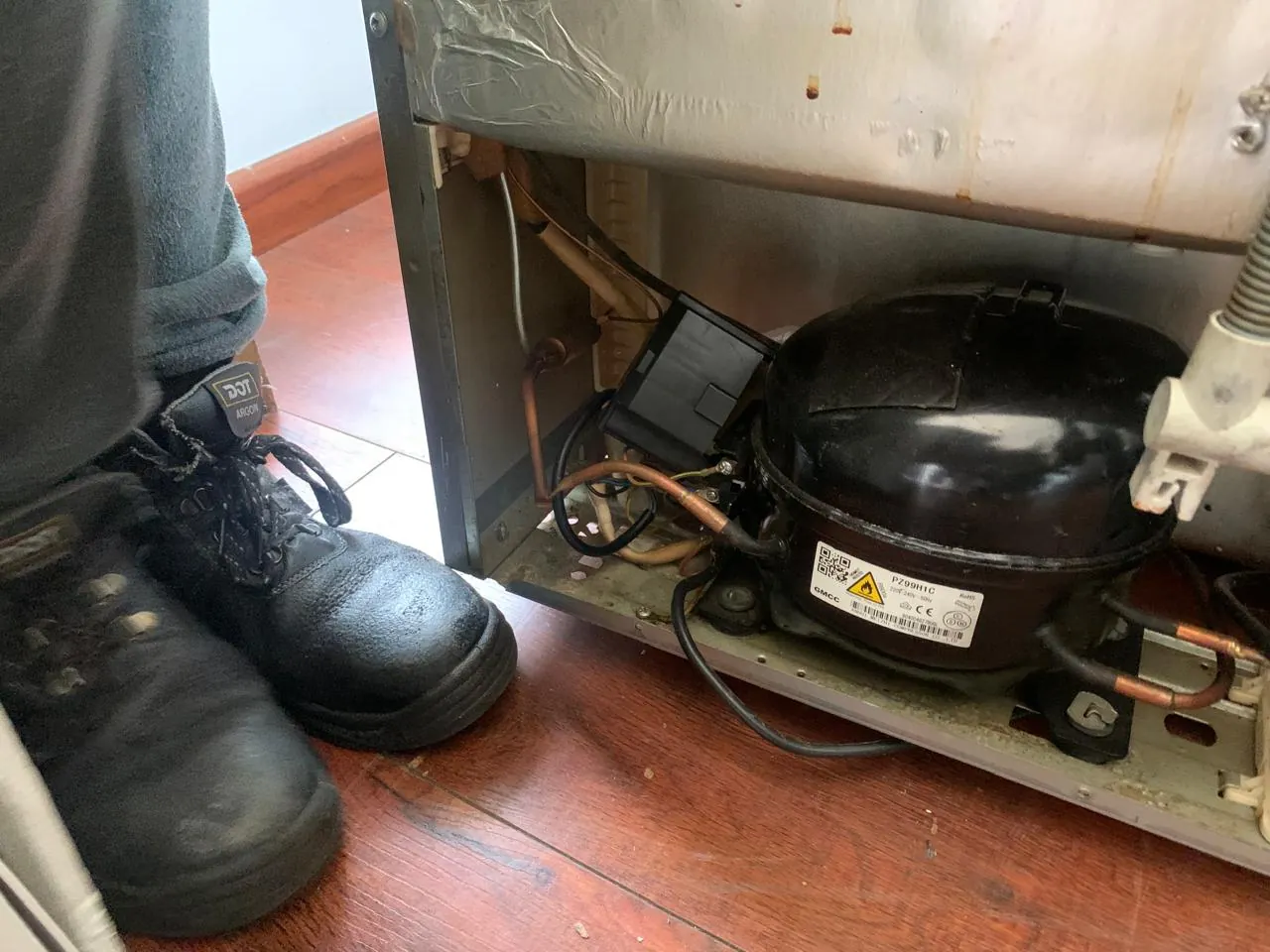
Inspecting the equipment behind the fault
We investigate the working parts, electrical controls and installation conditions involved before recommending what should be repaired.

Preparing for your Samrand service visit
Please provide site access rules, delivery or collection windows, a contact responsible for stock decisions and details of any backup refrigeration. Food and product safety remain governed by your own operating controls.
Please arrange an escort if the equipment is in a controlled warehouse zone, and give us the delivery or picking windows that cannot be interrupted. Keep a record of actual cabinet readings rather than only the alarm light. The site operator remains responsible for temperature-sensitive stock decisions.
If the displayed temperature exceeds your business hold limits, act under your existing food safety or product-handling procedure and document readings. Do not bypass alarms, overload circuits or repeatedly reset a tripping refrigeration plant. Only appropriately competent personnel should handle refrigerants and electrical components.
Comparing cooling recovery with dispatch demand
A unit that cools at rest but warms during picking needs to be reviewed under realistic operating conditions. We compare the available temperature history before and after service, including door openings and the amount of new stock introduced. If a fan or defrost component has been repaired, the operator should still watch for recurrence of icing or poor recovery. We discuss how ventilation and loading affect performance without claiming that every cabinet can recover instantly during heavy dispatch activity. Product safety decisions stay with the site team.
Service coverage and related repairs
Our service team handles enquiries in Samrand and other parts of Pretoria and Centurion. For a full explanation of our service scope, visit commercial refrigeration repairs in Pretoria. You can also explore appliance repairs in Samrand, browse the services directory or view recent repair work.