
Reliable commercial refrigeration system fault diagnosis and repairs
We attend to commercial display refrigerators, chilled storage cabinets, undercounter units and related cooling installations with unstable temperatures, alarms, leaks, frost or repeated shutdowns. We focus on protecting operational continuity while tracing the technical cause; the business remains responsible for decisions about product safety and disposal.
In Pretoria Central, commercial refrigeration may support takeaway kitchens, food retailers, offices or hospitality premises. We ask which cabinet is affected and whether other equipment shares its electrical circuit or ventilation space. When a business relies on chilled stock, rapid fault reporting and a clear temperature log are more useful than repeatedly adjusting the thermostat.
Faults we can assess
For a Pretoria Central display cabinet, the set point, real stock temperature and time of peak use are central to diagnosis. An undercounter refrigerator that warms during lunch trading may have excessive door use or condenser restrictions, while a unit that never reaches temperature requires further cooling tests. We interpret alarm history alongside cabinet conditions.
- Display cabinet or undercounter unit above its normal temperature
- Short cycling, protection trips or repeated high-temperature alarms
- Iced evaporators, condensation or leaking condensate
- Cooling performance falling during busy loading or trading periods
An undercounter fridge warms during peak service
Frequent door openings, warm food being introduced and restricted airflow can overload a small unit, but a weakened condenser fan or faulty thermostat can also reduce recovery. We ask whether the cabinet holds temperature overnight and what its normal set point is. That comparison helps separate operational loading from mechanical cooling defects.
A display cabinet produces water on the floor
Blocked drain paths, damaged door gaskets, defrost behaviour or cabinet levelling can create leaks. We inspect the origin before replacing parts. Water near food handling or electrical equipment should be dealt with immediately using the premises safety procedures.
A temperature alarm returns after every restart
An alarm may follow an actual high-temperature condition, sensor fault or an unresolved cooling failure. Resetting it without recording actual temperatures removes useful evidence. We review alarm history and controller settings before making adjustments.
A practical repair plan, not unnecessary parts
In Pretoria Central premises, one undercounter cabinet may be loaded heavily during trading and run normally overnight. We compare those temperature patterns with door openings, nearby hot equipment and the condenser’s ventilation path. If performance continues to fall at quiet times, a faulty fan, control or refrigeration circuit becomes more likely than workload alone.
Water under a chilled display can create immediate safety and hygiene problems. We investigate condensate drainage, defrost function and door sealing to trace the source. Continuing to run a cabinet that leaks over electrical equipment is unsafe, and product affected by unsuitable temperatures must be handled under the business’s existing procedures.
What we check before recommending a repair
We aim to identify whether there is a correctable ventilation, drainage or door-seal problem, or an actual mechanical or control failure. A replacement compressor or refrigerant repair is not suggested simply because the cabinet feels warm. If a single unit must be shut down, we discuss how the business will maintain its food-safety controls.
Where a manager needs the unit back quickly, we still explain the fault, any isolation necessary and spare-part availability rather than making unverified promises. We ask for cabinet temperature readings, store-floor access conditions and the responsible person’s permission before proceeding.
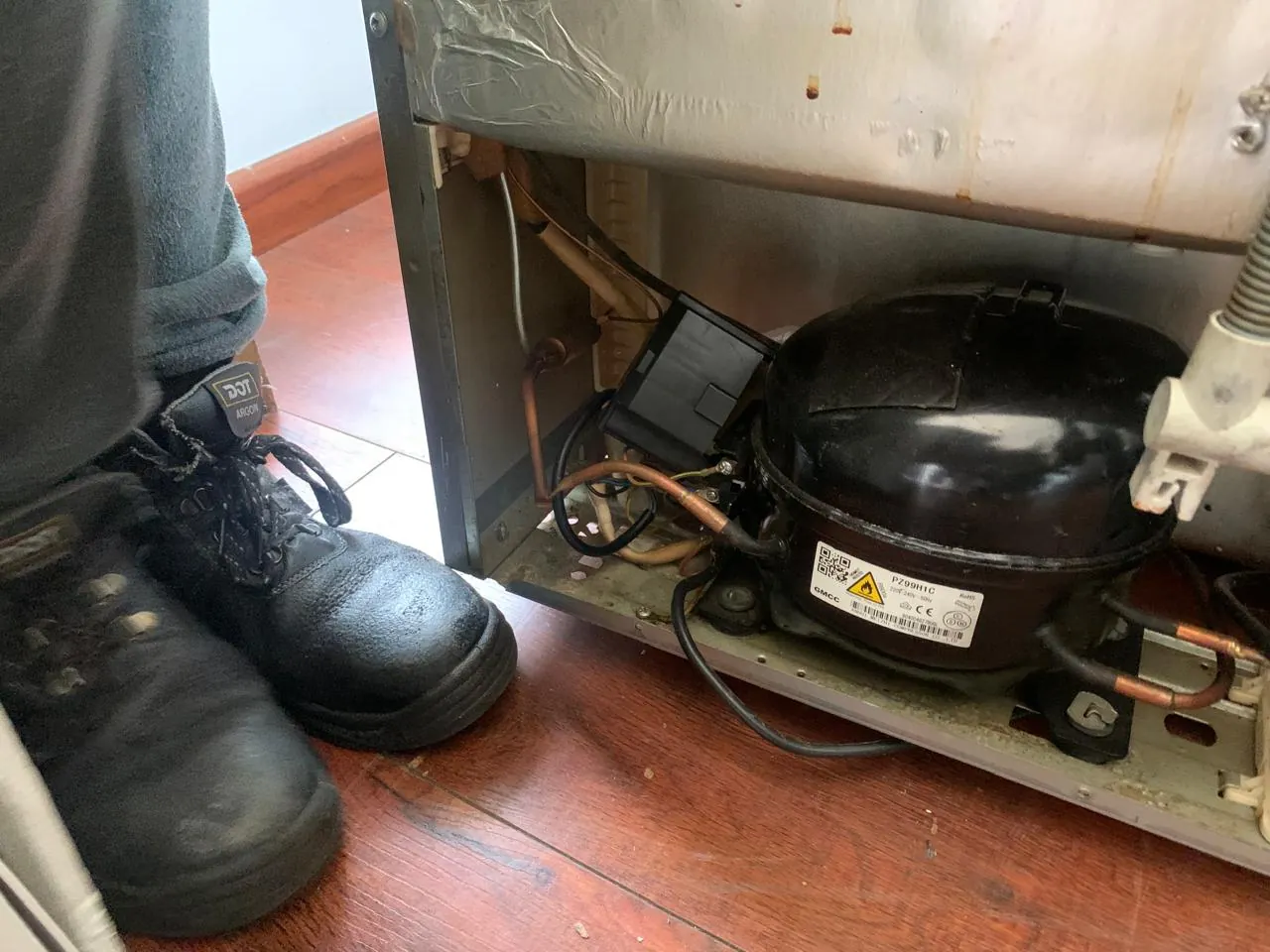
Inspecting the equipment behind the fault
We investigate the working parts, electrical controls and installation conditions involved before recommending what should be repaired.

Preparing for your Pretoria Central service visit
Send the business name, floor or unit number, trading hours, manager’s contact, recent cabinet temperatures and plant access instructions. If goods are outside your approved storage range, follow the business product-safety procedure promptly.
Provide the unit’s set point and actual readings, plus the floor, room and access contact. Let us know if condensate is on the floor or electrical fittings. The responsible operator should move or isolate any stock outside approved temperature limits before the repair appointment.
If the displayed temperature exceeds your business hold limits, act under your existing food safety or product-handling procedure and document readings. Do not bypass alarms, overload circuits or repeatedly reset a tripping refrigeration plant. Only appropriately competent personnel should handle refrigerants and electrical components.
Returning a business refrigerator to planned service
Before a repaired cabinet is relied on again, the site operator needs evidence that it can return toward its operating temperature without recurring alarms. We assess the corrected component and the relevant cooling behaviour, while the business follows its product-handling rules. A condensate leak should no longer reach the floor or electrical areas. We discuss any remaining ventilation or access concern and advise the responsible manager what should be monitored after the technician leaves. Product release decisions remain with the business.
Service coverage and related repairs
Our service team handles enquiries in Pretoria Central and other parts of Pretoria and Centurion. For a full explanation of our service scope, visit commercial refrigeration repairs in Pretoria. You can also explore appliance repairs in Pretoria Central, browse the services directory or view recent repair work.